

Smart & Interactive Glass Solutions


Train Electrically Heated Glass: Integrating Conductive Media & Thermal Control
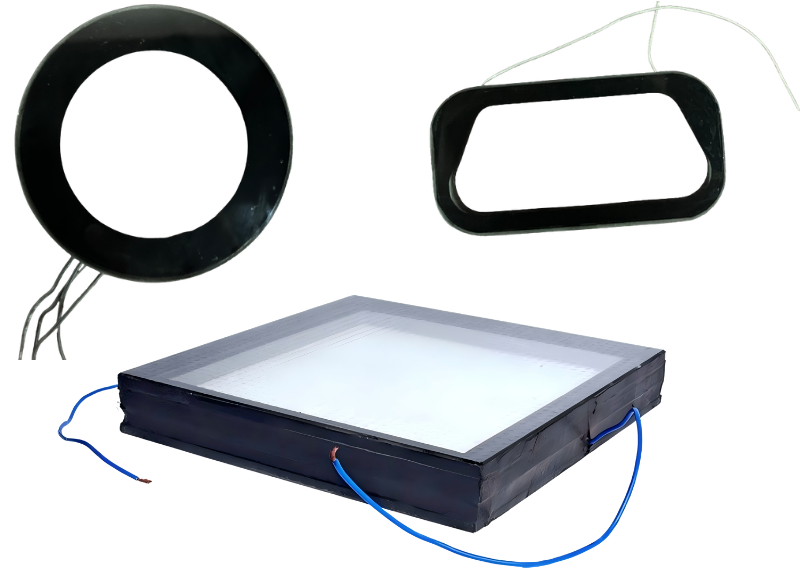
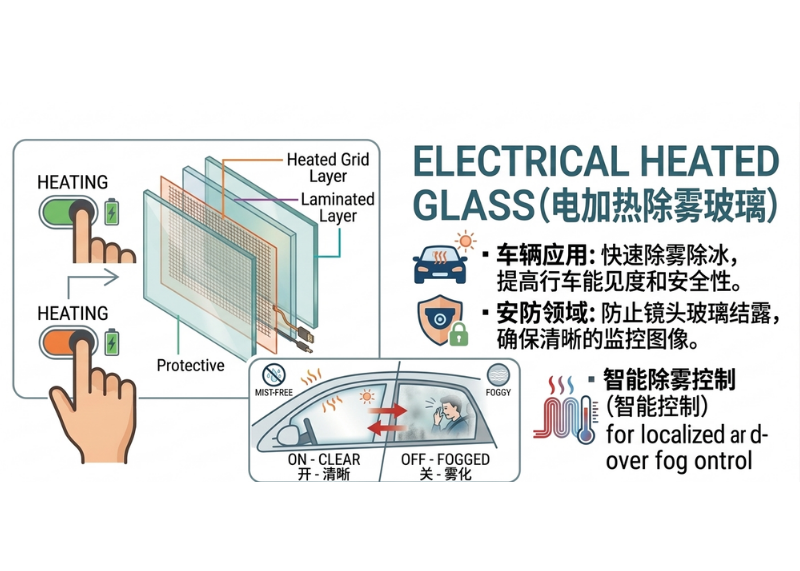
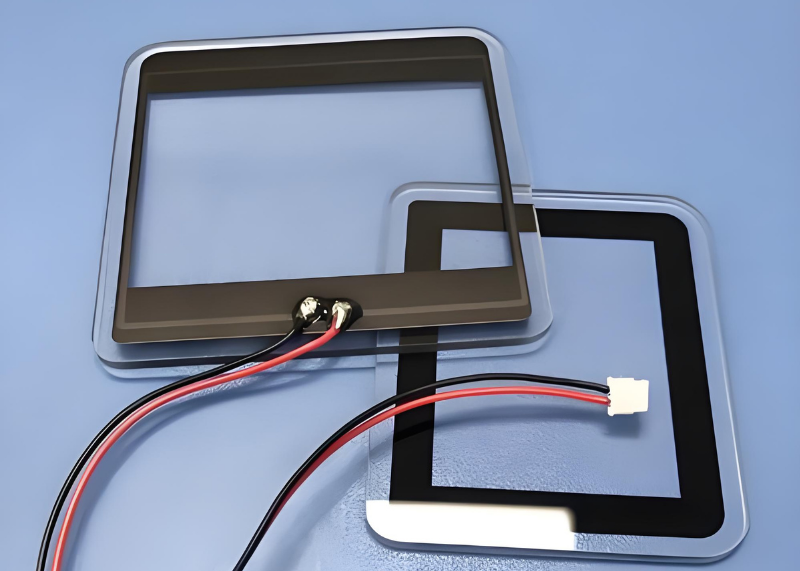
Electrically heated glass is a laminated glass product containing a transparent conductive coating or nearly invisible fine heating wires. When connected to a power supply and controller, it warms the glass surface evenly. This prevents condensation, fog, frost, and snow from forming, keeping the glass clear in cold, humid, or high-altitude environments.
It is used in architectural windows, skylights, facades, entrance doors, refrigerated displays, automotive windows, and specialist transport applications. Unlike conventional heaters that warm the air, electrically heated glass heats the surface directly, delivering fast and targeted performance.
A transparent conductive coating or fine tungsten wires are laminated inside the glass.
Busbars carry electrical current across the glass surface.
A transformer or controller supplies safe, regulated voltage.
A thermostat or sensor maintains the desired surface temperature.
The laminated structure protects the heating element and provides safety.
Heat radiates from the glass surface, preventing condensation and frost.
Available in low-voltage and mains-voltage configurations, heated glass can be designed for specific climates, frame systems, and control requirements.
Anti-condensation, defogging, and defrosting performance
Even heat distribution with no visible hotspots
High light transmission and clear visibility
Optional low-e coating for improved thermal insulation
Laminated safety glass construction
Silent, invisible heating with no moving parts
Compatible with thermostats, timers, sensors, and BMS
Custom sizes, shapes, voltages, and wattages
Suitable for new builds and some retrofit projects
Electrically heated glass keeps windows, skylights, and displays free from fog, frost, and condensation, improving safety and appearance.
By warming the glass surface, it reduces cold radiation and draughts near windows, creating a more comfortable indoor environment.
Heated glass can reduce reliance on perimeter heating and improve comfort at lower ambient temperatures. Low-e heated glass further improves U-value and thermal performance.
With no bulky radiators, blinds, or external defrosting systems, architects and designers can specify larger glazed areas with clean, minimalist lines.
Laminated and tempered options provide strength, safety, and noise reduction. The heating element is protected inside the glass, making it virtually maintenance-free.
Electrically heated glass can be integrated with KNX, DALI, Zigbee, Wi-Fi, and building management systems for automated climate and visibility control.
Architectural: windows, facades, skylights, conservatories, entrance doors, glass roofs
Commercial: shop windows, refrigerated displays, freezers, restaurant terraces, office partitions
Automotive: windshields, rear windows, side windows, mirrors, sunroofs
Transport: trains, buses, boats, aircraft, specialty vehicles
Healthcare: operating rooms, cold rooms, control rooms, pharmacy displays
Industrial: inspection windows, cold storage, outdoor control panels
| Parameter | Typical Range |
|---|---|
| Glass Types | Tempered, laminated, low-e, tinted, reflective |
| Thickness | 6–12 mm, project-specific |
| Voltage | 24 V, 48 V, 110 V, 220 V |
| Power Density | 100–500 W/m², depending on climate and function |
| Surface Temperature | Controlled, typically 25–50°C |
| Light Transmission | >70% for clear glass; lower for tinted options |
| Safety | Laminated and/or tempered construction |
| Controls | Switch, thermostat, timer, remote, app, BMS |
| Certifications | CE, RoHS, ISO, UL depending on market and supplier |
Electrically heated glass is installed like conventional laminated glass, with additional wiring for power and control. Wiring is usually hidden within the frame, and a transformer or controller is mounted nearby. Installation should be carried out by qualified glaziers and electricians.
Maintenance is minimal. Clean with standard non-abrasive glass cleaners, avoid damaging busbars or connectors, and ensure electrical connections remain dry and secure. Periodic inspection of the controller and wiring is recommended.
Size, shape, cutouts, and holes
Clear, grey, bronze, blue, and custom tints
Low-e, reflective, and acoustic coatings
Voltage, wattage, and power density
Busbar position and connector type
Wall switch, remote, mobile app, voice control, sensors
Integration with KNX, DALI, Zigbee, Wi-Fi, and BMS
1. Does electrically heated glass prevent condensation?
Yes. It warms the glass surface above the dew point, preventing condensation and fog.
2. Can electrically heated glass melt snow and ice?
Yes, with sufficient power density, it can melt snow and ice and keep surfaces clear.
3. Is electrically heated glass safe?
Yes. It uses laminated and/or tempered glass, and low-voltage options with thermostatic control are available.
4. Is electrically heated glass energy efficient?
It uses electricity, but it can reduce local heating demand and improve comfort. Low-e versions offer better thermal insulation.
5. Can it be retrofitted into existing windows?
In some cases, yes, depending on the frame, glazing rebate, and availability of electrical wiring.
6. How long does electrically heated glass last?
With proper installation and maintenance, it is designed for long-term service in demanding environments.
We always need your help to expand and develop our business. If you are interested in our products or are interested in becoming our partner, please click the button below and our team will contact you as soon as possible.
Related Product

Smart Dimming & Switchable Glass
Smart Dimming & Switchable Glass is an advanced intelligent glazing technology that allows glass to transition instantly between transparent and opaque states at the touch of a button. Using PDLC, electrochromic, or SPD technologies, it gives users precise control over light, glare, and privacy without the need for blinds or curtains. Ideal for offices, hotels, healthcare facilities, residential interiors, and automotive applications, it combines modern aesthetics with energy efficiency, reducing cooling loads and enhancing comfort. With options for dimming, zoning, and smart-home integration, it delivers privacy on demand, cleaner design lines, and a more sustainable building envelope. Easy to install and maintain, it is a future-ready solution for architects, designers, and developers seeking flexible, high-performance glass.

HMIS cover glass is a specialized protective glass engineered for human-machine interface systems used in military, defense, and harsh industrial environments. Positioned as the outermost layer above touch sensors and LCD modules, it shields displays from impact, scratches, chemicals, and extreme temperatures while maintaining optical clarity and touch sensitivity. Manufactured from chemically strengthened aluminosilicate or soda-lime glass, HMIS cover glass delivers high surface hardness, excellent scratch resistance, and reliable performance under vibration, shock, and moisture exposure. It can be customized with anti-glare, anti-reflective, and anti-fingerprint coatings to ensure readability in direct sunlight and demanding field conditions. Available in thin formats with precise dimensions, printed borders, and cutouts, HMIS cover glass meets MIL-SPEC and defense procurement requirements. It is the first line of defense for mission-critical displays in vehicles, control rooms, portable terminals, and outdoor installations.
Address
No. 8 Sanhe North Road, Nanhe District Industrial Park, Xingtai City, Hebei Province
+86 153 8309 2012

