

In the heat treatment process, physical tempered glass is prone to visible optical distortion, that is, "refraction" or "stress spot" due to uneven cooling or equipment factors, which not only affects the appearance, but also causes visual fatigue and even misjudgment under specific light, which seriously restricts its application in high-end window, museum showcase, precision instrument window and other fields that require high optical quality. The ion tempering technology developed by Ming dun Company provides a perfect solution to this problem. The ion strengthening process takes place at the molecular level. Through the uniform exchange of sodium ions and potassium ions, gradient strengthening in the depth direction is formed on the entire glass surface, and its stress changes continuously and smoothly. Different from the violent and irregular surface stress distribution caused by the rapid cooling of physical tempering, the compressive stress layer formed by this chemical method is extremely uniform and will not cause the sudden change of the internal refractive index of glass. Therefore, the Ming-dun ion tempered glass has ultra-high mechanical strength, while maintaining a high optical quality comparable to that of the original float glass, with almost no stress spots and no image distortion. This means that designers and engineers no longer need to compromise between "safety" and "beauty and clarity". Ming dun products have successfully achieved the unity of impact penetration resistance and excellent optical transparency, opening up new possibilities for high-end commercial space, art exhibition, optical devices and other fields, making security guards "invisible" in the pure vision.
Latest News
Jul. 27, 2026
Mingdun fire retardant laminated bulletproof explosion-proof glass to deal with sudden fire hazardsJul. 27, 2026
Mingdun heat insulation laminated bulletproof explosion-proof glass balanced carriage temperature controlHot Product
Mingdun fire retardant laminated bulletproof explosion-proof glass to deal with sudden fire hazards
Mingdun fire retardant laminated bulletproof explosion-proof glass to deal with sudden fire hazards In view of the industrial pain point of the closed space of rail transit carriages, which is caused by the rapid melting and fragmentation of ordinary glass in case of fire, the rapid spread of open flames and high-temperature smoke, Mingdun developed a special laminated bulletproof and explosion-proof glass with high temperature resistance and flame retardancy, which was pressed by a flame-retardant adhesive layer and high-strength fireproof glass. Key words: high temperature resistance, buffering and fire prevention, emergency protection, and rail transit fire prevention.
Mingdun heat insulation laminated bulletproof explosion-proof glass balanced carriage temperature control In view of the industry pain point of high-speed rail exposed to strong light during the day, heat poured into the car through the window, air conditioning load surged, ordinary laminated glass could not block infrared heat energy, and the sweltering energy consumption in the car increased, Mingdun was equipped with a heat insulation functional laminated film to create a special heat insulation laminated bulletproof explosion-proof glass for high-speed rail. The heat insulation special laminated layer blocks the infrared radiation of sunlight, reduces the heat penetration through the window, stabilizes the internal temperature of the carriage, and reduces the energy consumption of train air conditioning. Key words: temperature control, rubber clamping, energy saving, safety and heat insulation.
Mingdun silent laminated bulletproof explosion-proof glass to create a quiet ride space
Mingdun silent laminated bulletproof explosion-proof glass to create a quiet ride space In view of the wheel-rail noise, wind noise and tunnel echo caused by high-speed running of high-speed rail, the poor sound insulation effect of ordinary single-layer/ordinary laminated glass, the noise in the car affecting passengers' rest and drivers' concentration on driving, Mingdun developed a special laminated bulletproof and explosion-proof glass with damping and sound insulation, which was combined with a multi-layer protective substrate to form. Key words: sound insulation and noise reduction, cushioning and shock absorption, silent riding and explosion protection.
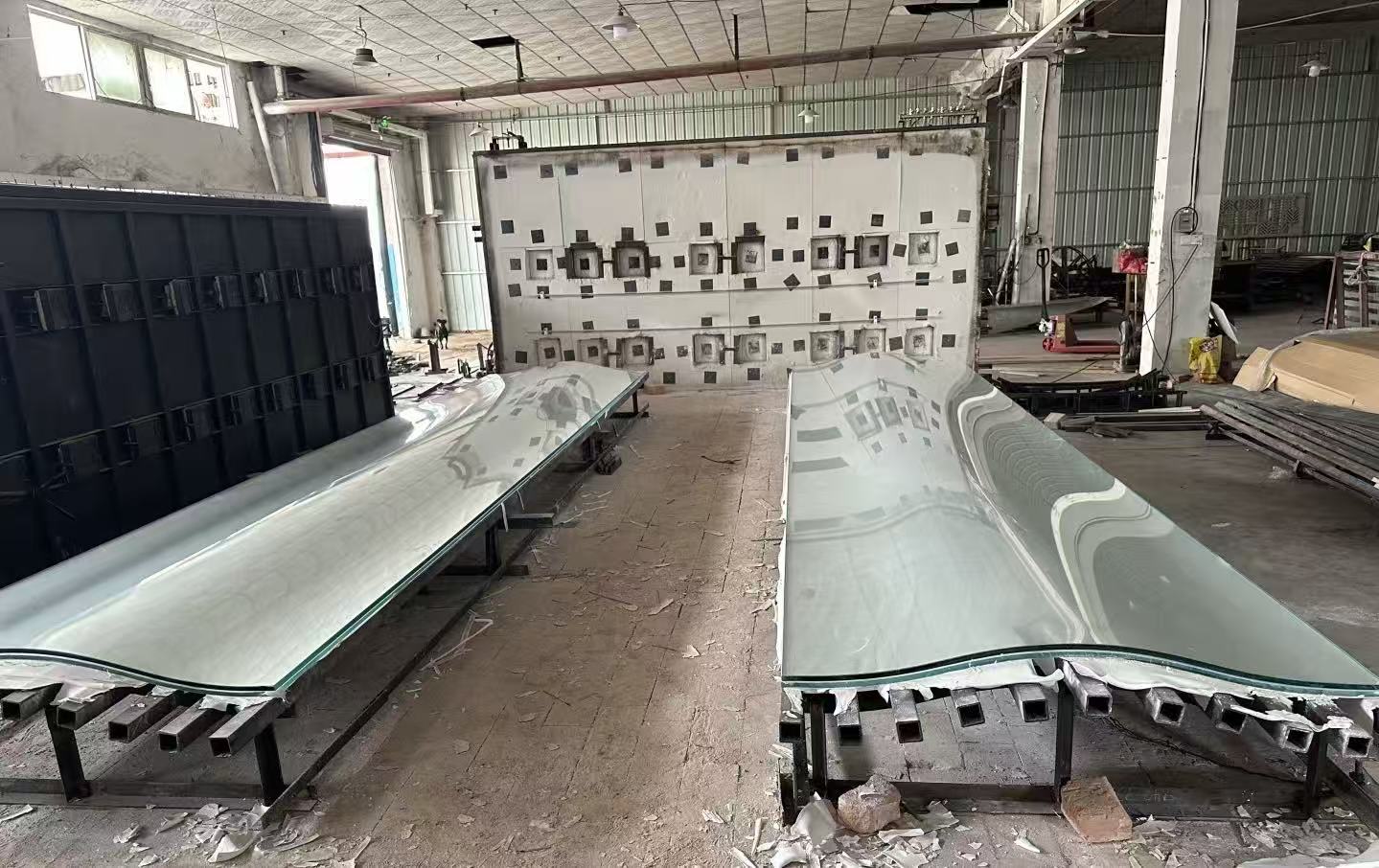
Special laminated bulletproof and explosion-proof glass for Mingdun high-speed railway to build a safety line for high-speed travel In view of the industrial pain points of the high-speed rail window, such as broken glass fragments scattered and scratched by the impact of gravel and birds, weak single-layer glass protection, and the whole piece falling off after impact, Mingdun deeply cultivated the core technology of composite laminated glass to create laminated bulletproof and explosion-proof glass for rail transit. The product adopts multiple high-strength glass substrates with high-toughness PVB explosion-proof interlayer, which is bonded and cured at high pressure and constant temperature, and the adhesive layer is closely attached to the glass without delamination and hollowing. Key words: multi-layer laminated rubber, fragment locking, integrated molding, rail crossing safety base.
Address
No. 8 Sanhe North Road, Nanhe District Industrial Park, Xingtai City, Hebei Province
+86 153 8309 2012

