

High Security Glazing
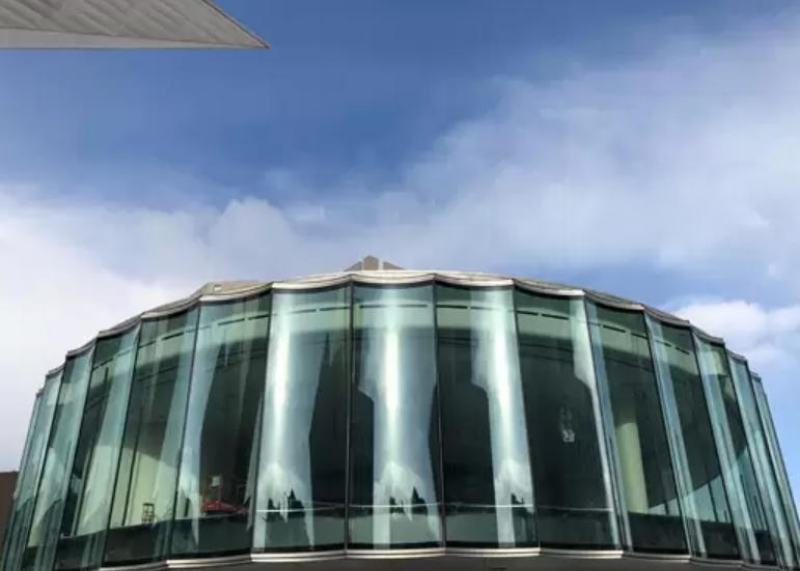
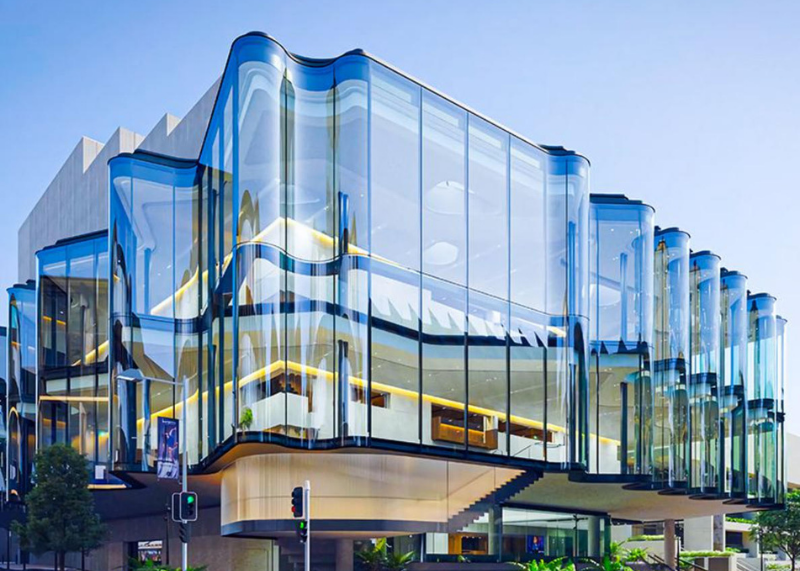


Chemically strengthened glass is a high-performance glass produced by ion exchange, where sodium ions are replaced by larger potassium ions to create a deep compressive stress layer. This makes thin glass stronger, more scratch-resistant, and more impact-resistant while preserving optical clarity. In architecture, it supports slim facades, partitions, balustrades, and doors when laminated for safety. In rail transport, it is used in windows, door vision panels, interior partitions, and display covers, helping meet demanding impact, fire, and durability requirements. In security, it forms a key component of laminated forced-entry and ballistic-resistant glazing, reducing weight and thickness while improving attack resistance. It can be coated, printed, curved, and laminated with PVB, SGP, or polycarbonate. Unlike thermally tempered glass, it can be processed before strengthening and offers excellent strength in thin formats. It is a versatile solution for safer, lighter, and more design-driven glazing across architecture, rail, and security.
Chemically Strengthened Glass: Ultimate Strength via Ion-Exchange Technology
Chemically strengthened glass, also called chemically tempered glass or ion-exchange glass, is glass that has been treated in a molten potassium salt bath. During this process, smaller sodium ions near the glass surface are replaced by larger potassium ions. This creates a compressive stress layer that resists cracks, scratches, and impact.
Unlike thermally tempered glass, chemical strengthening works well with thin glass and complex shapes. It does not produce the “dice” fragmentation pattern of thermal tempering, so it is not a safety glass by itself. For architectural, rail, and security applications, it is normally laminated with PVB, SGP, EVA, TPU, or polycarbonate to meet safety and security standards.
Cutting and Shaping: Glass is cut to size and shaped as required.
Edge Processing: Edges are polished, chamfered, drilled, or printed before strengthening.
Bending or Curving: If needed, glass is bent into 2D or 3D curves.
Ion Exchange: Glass is immersed in molten potassium salt at controlled temperature.
Compressive Layer Formation: Potassium ions replace sodium ions, creating surface compression.
Cooling and Cleaning: Glass is cooled and cleaned for downstream processing.
Lamination and Coating: Optional PVB, SGP, TPU, AR, AG, AF, ITO, or low-e coatings.
Inspection: Optical, dimensional, strength, and surface tests are performed.
Once strengthened, the glass cannot be cut, drilled, or edged without damaging the compressive layer. All fabrication must be completed before ion exchange.
High surface compressive stress, typically 500–900 MPa
Deep compressive layer, often 30–100 µm
Excellent strength in thin glass, from about 0.3 mm to 6 mm
Better scratch and impact resistance than ordinary glass
Low optical distortion and high clarity
Suitable for curved, bent, and complex geometries
Can be laminated, printed, coated, and integrated with sensors
Lighter and thinner than many thermally tempered alternatives
Not a standalone safety glass; lamination is required for safety and security
Chemically strengthened glass is used in architecture where thin, strong, clear, and design-driven glazing is required. Typical applications include:
Facades and curtain walls
Interior partitions and office dividers
Balustrades and railings
Doors and door vision panels
Skylights and canopies
Elevator interiors and display panels
Furniture, shelving, and decorative glass
For architectural safety glazing, it must be laminated. Laminated chemically strengthened glass can help meet impact, wind load, and safety requirements while keeping sightlines slim and reducing weight. It is especially useful for large-format, curved, or minimally framed designs.
In rail transport, glazing must resist vibration, impact, scratching, temperature changes, and vandalism while meeting fire, smoke, and toxicity requirements. Chemically strengthened glass is used in:
Train side windows
Door vision panels
Interior partitions
Passenger information displays
Cab and crew compartment glazing
Mirror and display covers
Emergency exit windows, when engineered and certified
Laminated chemically strengthened glass can help reduce weight, improve optical clarity, and maintain strength in thin formats. Rail projects should specify glass according to relevant standards, such as EN 45545 for fire performance and EN 15152 for windscreens where applicable. Final approval depends on the complete glazing assembly, frame, and installation.
Chemically strengthened glass is a valuable component in security glazing because it offers high strength, scratch resistance, and optical clarity. It is not bullet-resistant or forced-entry-resistant on its own. Security performance comes from lamination with materials such as PVB, SGP, TPU, polycarbonate, or acrylic.
Typical security applications include:
Bank counters and teller windows
Embassy, government, and court buildings
Data centers and control rooms
Retail display cases and museum vitrines
Detention and correctional facilities
Cash-in-transit and armored vehicle glazing
Forced-entry, blast-resistant, and ballistic-resistant assemblies
Security glazing may be tested to standards such as EN 356, EN 1063, UL 752, ASTM F1233, or project-specific requirements. Chemically strengthened glass can reduce thickness and weight while maintaining required protection when correctly engineered.
| Property | Chemically Strengthened | Thermally Tempered | Heat-Strengthened |
|---|---|---|---|
| Strengthening method | Ion exchange | Rapid heating and cooling | Controlled heating and cooling |
| Surface compression | 500–900 MPa | Usually >69 MPa | 24–52 MPa |
| Typical thickness | 0.3–6 mm | Usually 3 mm and above | Usually 4 mm and above |
| Cutting after strengthening | No | No | No |
| Fragmentation | Not safety glass alone | Breaks into small dice | Larger shards |
| Optical distortion | Low | Higher than chemical | Moderate |
| Best use | Thin, curved, rail, security laminates | Safety glass, facades, doors | Facades, windows, spandrels |
| Parameter | Typical Range |
|---|---|
| Glass Types | Soda-lime, aluminosilicate, borosilicate |
| Thickness | 0.3–6 mm, project-specific |
| Surface Compressive Stress | 500–900 MPa |
| Depth of Compressive Layer | 30–100 µm |
| Light Transmission | >90% for clear glass |
| Haze | <1% for optical-grade glass |
| Coatings | AR, AG, AF, ITO, low-e, anti-bacterial |
| Lamination | PVB, SGP, EVA, TPU, polycarbonate |
| Shapes | Flat, curved, 2D, 3D, custom |
| Edge Treatment | Polished, chamfered, drilled |
| Standards | Project-specific; EN, ASTM, UL, ISO |
Size, shape, curvature, and thickness
Clear, tinted, coated, or printed surfaces
Anti-reflective, anti-glare, and anti-fingerprint finishes
Ceramic printing, logos, and decorative patterns
Holes, cutouts, and edge profiles
Lamination for safety, security, acoustic, and UV performance
Integration with heating elements, touch sensors, and smart glass
Frame and mounting system design support
Chemically strengthened glass should be tested for:
Surface compressive stress and depth of layer
Dimensional accuracy and curvature tolerance
Optical distortion and haze
Impact and flexural strength
Edge quality and surface defects
Coating adhesion and durability
Lamination bond strength
Fire, ballistic, forced-entry, or blast performance where required
Suppliers should provide test reports, certificates, and samples for critical architectural, rail, and security projects.
Handle with clean gloves and protect edges from impact.
Do not cut, drill, or edge glass after chemical strengthening.
Store vertically in dry, ventilated conditions.
Install according to approved shop drawings and structural calculations.
Use qualified glaziers and electricians for integrated systems.
Clean with non-abrasive glass cleaners and soft cloths.
Avoid harsh chemicals, scrapers, and abrasive pads.
Inspect edges, seals, and connections periodically.
1. Is chemically strengthened glass safety glass?
No, not by itself. It must be laminated to meet safety glazing requirements.
2. Can chemically strengthened glass be cut after strengthening?
No. All cutting, drilling, and edging must be done before ion exchange.
3. What is the difference between chemically strengthened and thermally tempered glass?
Chemical strengthening uses ion exchange and works well with thin glass. Thermal tempering uses heat and cooling and produces dice-like fragmentation.
4. Can it be used in trains?
Yes, when laminated and specified to meet relevant rail standards for impact, fire, and durability.
5. Can it stop bullets?
Only as part of an engineered laminated security glazing assembly tested to ballistic standards.
6. Is it stronger than ordinary glass?
Yes. The compressive stress layer significantly improves scratch, impact, and flexural resistance.
7. Can it be curved?
Yes. Glass can be bent or curved before chemical strengthening.
8. Does it break?
Yes, glass can still break, but laminated assemblies can retain fragments and maintain protection.
We always need your help to expand and develop our business. If you are interested in our products or are interested in becoming our partner, please click the button below and our team will contact you as soon as possible.
Related Product
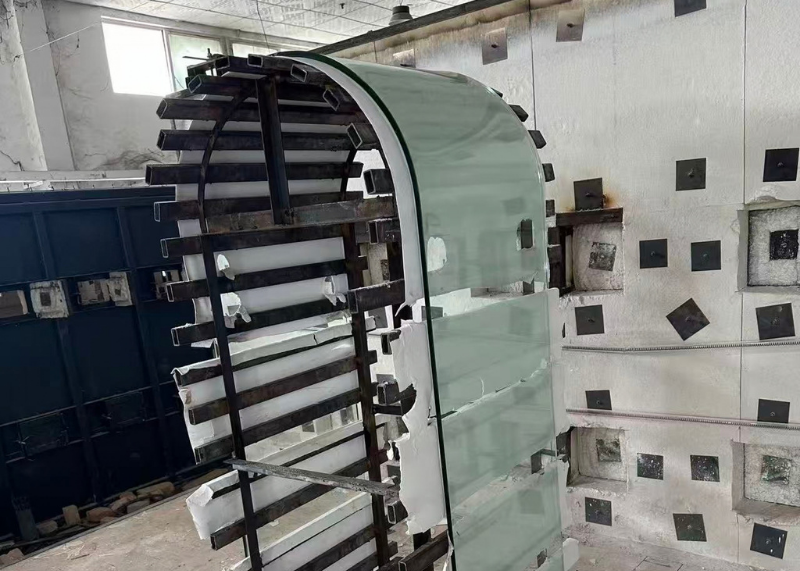
Bent Chemically Strengthened Glass
Bent chemically strengthened glass is a high-performance curved glass produced by shaping glass into precise 2D or 3D curves, then strengthening it through ion exchange. In this process, smaller sodium ions are replaced by larger potassium ions, creating a deep compressive layer that improves scratch, impact, and flexural resistance. This allows thin, lightweight glass to achieve exceptional strength while maintaining optical clarity and design freedom. Unlike thermally tempered curved glass, chemically strengthened glass can be made thinner, with tighter bend radii and complex geometries, making it ideal for automotive displays, curved touch screens, smart appliances, medical devices, and premium architectural interiors. It can be combined with anti-glare, anti-fingerprint, anti-reflective, and low-e coatings. Customizable in thickness, curvature, shape, and surface finish, it supports edge polishing, printing, and lamination. For designers seeking durable, elegant, and lightweight curved glass, bent chemically strengthened glass offers a versatile, future-ready solution.
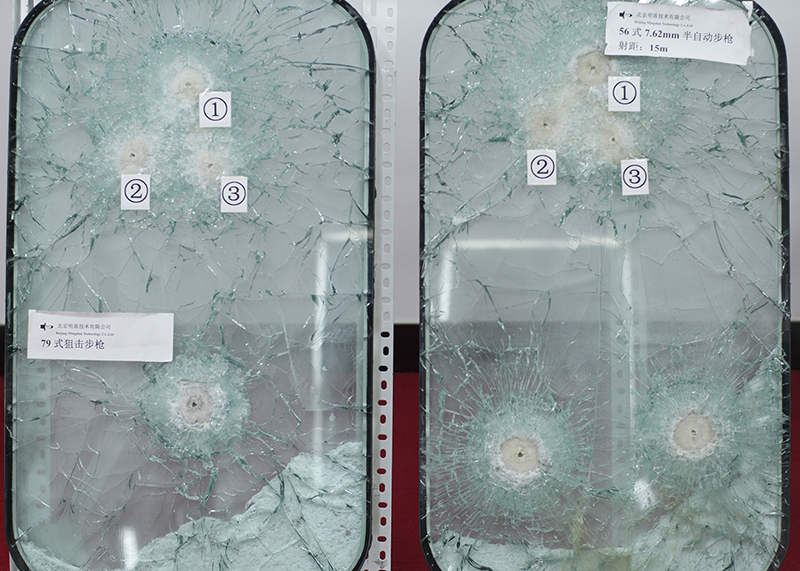
Bulletproof & High-lmpact Resistant Glass
Bulletproof and high-impact resistant glass is a specialized security glazing engineered to stop projectiles, absorb impact, and resist forced entry. It is typically made by laminating multiple layers of glass with tough interlayers such as PVB, SGP, TPU, or polycarbonate, sometimes combined with acrylic or polycarbonate sheets. This construction distributes impact energy, prevents penetration, and holds fragments together, protecting people and property. Available in transparent, tinted, and one-way vision options, it can be tested to ballistic standards such as UL 752, EN 1063, and ASTM, as well as forced-entry standards like EN 356. Applications include banks, embassies, government buildings, courtrooms, jewelry stores, cash-in-transit vehicles, armored cars, and VIP transport. It can be curved, insulated, and integrated with access control, intercoms, and voice transmission systems. Customizable in thickness, protection level, and optical performance, it delivers reliable security without sacrificing visibility.
Address
No. 8 Sanhe North Road, Nanhe District Industrial Park, Xingtai City, Hebei Province
+86 153 8309 2012

